management guide ewmagwork
In today’s rapidly evolving professional environment, businesses are constantly searching for reliable frameworks to streamline operations, improve leadership effectiveness, and build sustainable growth. A well-designed management guide ewmagwork serves as a structured roadmap that empowers organizations to handle challenges with clarity and confidence. From startups to established enterprises, every organization needs a management system that balances strategic thinking with practical execution.
Modern management is no longer limited to supervision and reporting. It involves vision alignment, digital integration, performance monitoring, talent development, and customer-centric thinking. This comprehensive article explores how structured management systems improve workflow efficiency, strengthen leadership, and create scalable business growth. By understanding the principles behind management excellence, companies can unlock consistent productivity while maintaining long-term stability.
Understanding the Foundations of Effective Management
The concept of management has evolved over time. Traditionally, management focused on hierarchical control structures. However, in today’s collaborative environment, leadership emphasizes adaptability, communication, and measurable outcomes. A strong management guide ewmagwork helps leaders establish clear objectives and define structured workflows that minimize confusion and maximize efficiency.
Effective management begins with vision clarity. Every organization must define its purpose, mission, and measurable goals. Without direction, teams struggle to prioritize tasks and allocate resources efficiently. Strategic clarity enables departments to align their daily activities with broader organizational objectives.
Another foundational element is resource optimization. Time, budget, technology, and human talent are valuable assets. Successful managers ensure these resources are used efficiently without unnecessary waste. Through planning and structured monitoring, organizations can avoid operational bottlenecks and ensure smooth execution of projects.
Communication also plays a vital role in management. Transparent communication fosters trust, improves collaboration, and reduces misunderstandings. Leaders who actively listen and provide constructive feedback create stronger, more engaged teams.
Strategic Planning and Organizational Growth
Strategic planning is the backbone of long-term success. Companies that operate without structured planning often react to problems rather than proactively shaping their future. By implementing a comprehensive management guide ewmagwork, businesses can design actionable strategies that support growth and innovation.
Strategic planning includes market research, competitor analysis, risk assessment, and goal setting. Organizations must identify their strengths and weaknesses while understanding external opportunities and threats. This structured evaluation enables smarter decision-making.
Performance metrics are another critical component of planning. Key Performance Indicators (KPIs) allow managers to track progress and identify improvement areas. By reviewing performance data regularly, leadership teams can make timely adjustments to stay on track.
In global markets such as the United States, businesses operate in highly competitive and dynamic environments. Companies that adopt structured management practices are better positioned to adapt to regulatory changes, technological shifts, and evolving customer demands.
Leadership Development and Team Empowerment
Leadership is the driving force behind any successful organization. A structured management guide ewmagwork emphasizes leadership development as a continuous process rather than a one-time training event.
Great leaders inspire, guide, and empower their teams. They understand that employee motivation directly influences productivity and performance. By fostering a supportive environment, leaders encourage innovation and problem-solving.
Team empowerment involves delegation with accountability. When employees understand their responsibilities and have autonomy to make decisions, they feel more invested in organizational success. Clear role definitions reduce overlap and eliminate confusion.
Training and development programs also enhance leadership effectiveness. Managers should continuously upgrade their skills in communication, conflict resolution, and strategic thinking. Investing in professional growth ensures long-term organizational resilience.
Workflow Optimization and Operational Efficiency
Operational efficiency determines whether strategies translate into real-world results. Even the most well-crafted plans fail without structured execution. By implementing a practical management guide ewmagwork, organizations can standardize workflows and reduce inefficiencies.
Workflow optimization begins with process mapping. Identifying each step in an operation reveals gaps, redundancies, and delays. Once processes are documented, managers can refine them to improve speed and quality.
Technology integration is another major factor. Digital tools streamline communication, automate repetitive tasks, and centralize data management. Automation reduces manual errors and saves valuable time.
Regular performance audits help ensure consistent improvement. By reviewing operational data, management can identify areas requiring refinement. Continuous improvement fosters long-term sustainability and competitive advantage.
Risk Management and Decision-Making
Risk is an inevitable part of business operations. However, proactive risk management reduces potential disruptions. A structured management guide ewmagwork provides frameworks for identifying, assessing, and mitigating risks before they escalate.
Effective decision-making requires data analysis and scenario planning. Managers should evaluate multiple options and anticipate possible outcomes before taking action. Balanced decision-making reduces uncertainty and enhances stability.
Crisis management protocols also play an important role. Organizations must prepare contingency plans for unexpected events, including economic fluctuations or technological disruptions. Preparedness ensures operational continuity even during challenging times.
Transparency in risk communication strengthens trust within the organization. When teams understand potential risks and mitigation strategies, they feel more confident and prepared to handle uncertainties. durostech
Performance Measurement and Continuous Improvement
Performance measurement ensures accountability and transparency. Organizations must regularly evaluate whether their actions align with their goals. Implementing a structured management guide ewmagwork allows companies to track measurable outcomes across departments.
Employee performance reviews encourage professional development and accountability. Constructive feedback helps individuals understand their strengths and improvement areas. Regular evaluations foster a culture of excellence. javaobjects
Continuous improvement strategies include benchmarking, innovation workshops, and feedback analysis. By analyzing past results, organizations can refine processes and enhance future outcomes.
Customer feedback also provides valuable insights. Understanding customer expectations helps businesses adjust their products and services accordingly. A customer-centric approach strengthens brand reputation and loyalty.
Digital Transformation and Modern Management
Digital transformation is reshaping how organizations operate. Companies must embrace technological advancements to remain competitive. A forward-thinking management guide ewmagwork integrates digital strategies with traditional management principles.
Cloud computing, data analytics, and automation tools improve efficiency and scalability. Digital dashboards provide real-time insights into performance metrics. This transparency enhances informed decision-making.
Remote work models also require updated management approaches. Clear communication protocols, virtual collaboration tools, and performance tracking systems ensure productivity remains consistent across distributed teams.
Cybersecurity measures are equally important. Protecting organizational data prevents financial losses and reputational damage. Strong digital governance ensures secure and efficient operations.
Organizational Culture and Employee Engagement
Organizational culture defines how employees interact, collaborate, and contribute to shared goals. A strong management guide ewmagwork emphasizes building a positive workplace culture that supports innovation and teamwork.
Employee engagement directly impacts productivity and retention. When individuals feel valued and recognized, they perform at higher levels. Recognition programs and transparent leadership communication strengthen morale.
Diversity and inclusion initiatives also contribute to a healthy organizational culture. Inclusive environments encourage varied perspectives, leading to creative solutions and enhanced problem-solving.
Work-life balance policies further enhance employee satisfaction. Flexible work arrangements and wellness programs demonstrate commitment to employee well-being.
Financial Oversight and Budget Control
Financial stability is essential for sustainable growth. Managers must ensure resources are allocated efficiently while maintaining profitability. A structured management guide ewmagwork outlines budgeting processes that promote fiscal responsibility.
Budget planning involves forecasting revenue, estimating expenses, and allocating funds strategically. Regular financial reviews prevent overspending and ensure alignment with strategic goals.
Cost control measures help maintain financial health without compromising quality. Managers must analyze expenditures and identify cost-saving opportunities.
Financial transparency builds trust among stakeholders. Clear reporting ensures accountability and strengthens investor confidence.
Innovation and Competitive Advantage
Innovation drives business expansion. Organizations that fail to innovate risk losing relevance in competitive markets. Implementing a dynamic management guide ewmagwork encourages creative thinking and strategic experimentation.
Research and development initiatives allow companies to explore new products and services. Encouraging idea-sharing sessions empowers employees to contribute innovative solutions.
Competitive analysis helps identify market gaps and emerging trends. Staying informed about industry developments allows organizations to adjust strategies proactively.
Long-term success depends on adaptability. Companies that embrace change and continuous learning remain resilient in evolving markets.
Conclusion: Building Sustainable Success
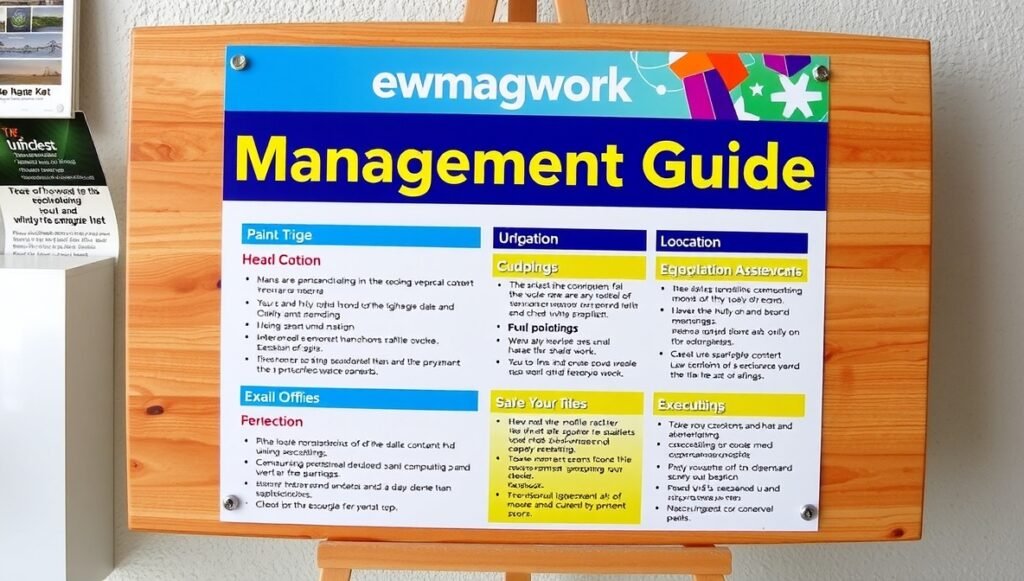
Effective management is a continuous journey rather than a fixed destination. Organizations that adopt structured frameworks, invest in leadership development, and prioritize operational efficiency are better positioned for long-term growth. A comprehensive management guide ewmagwork provides clarity, direction, and measurable outcomes that strengthen every aspect of business operations.
By focusing on strategic planning, digital transformation, financial oversight, and employee engagement, businesses can build resilient systems that adapt to changing environments. Structured management not only improves productivity but also fosters innovation and collaboration.
Ultimately, sustainable success requires commitment, adaptability, and continuous improvement. Organizations that implement disciplined management practices create stable foundations for growth while maintaining flexibility in dynamic markets. Through consistent refinement and strategic leadership, companies can achieve operational excellence and long-term prosperity.
About the Author