How To Respond When Someone Says Theyre Happy For You
When someone tells you they are happy for you, it usually comes from a place of kindness, encouragement, or genuine excitement. Knowing How To Respond When Someone Says Theyre Happy For You helps strengthen relationships while showing appreciation for their thoughtful words. A warm reply also reflects confidence and gratitude without sounding awkward or forced.
Many people overthink their response because they worry about saying the wrong thing. Fortunately, there is no perfect answer. The best responses are sincere, respectful, and suited to the situation. Whether the compliment comes from a friend, family member, coworker, or acquaintance, responding thoughtfully leaves a lasting positive impression.
Why People Say They Are Happy for You
People express happiness for your achievements because they care about your success. They may celebrate your promotion, graduation, engagement, personal growth, or any positive milestone. Their words show support and strengthen your emotional connection with them through shared joy and encouragement.
Sometimes the phrase also reflects admiration for your hard work or determination. Even if they were not directly involved in your journey, they recognize your efforts. Understanding this intention makes it easier to respond naturally and appreciate their kindness without feeling uncomfortable.
The Importance of Responding Graciously
A thoughtful reply shows respect for the person’s feelings. When someone celebrates your success, acknowledging their kindness creates stronger friendships and healthier relationships. Gratitude encourages positive conversations and makes people feel valued for sharing your happiness.
Ignoring or minimizing their words can unintentionally seem dismissive. Even a simple thank you can make a meaningful difference. Learning How To Respond When Someone Says Theyre Happy For You ensures your conversations remain warm, genuine, and memorable for everyone involved.
Simple Responses That Always Work
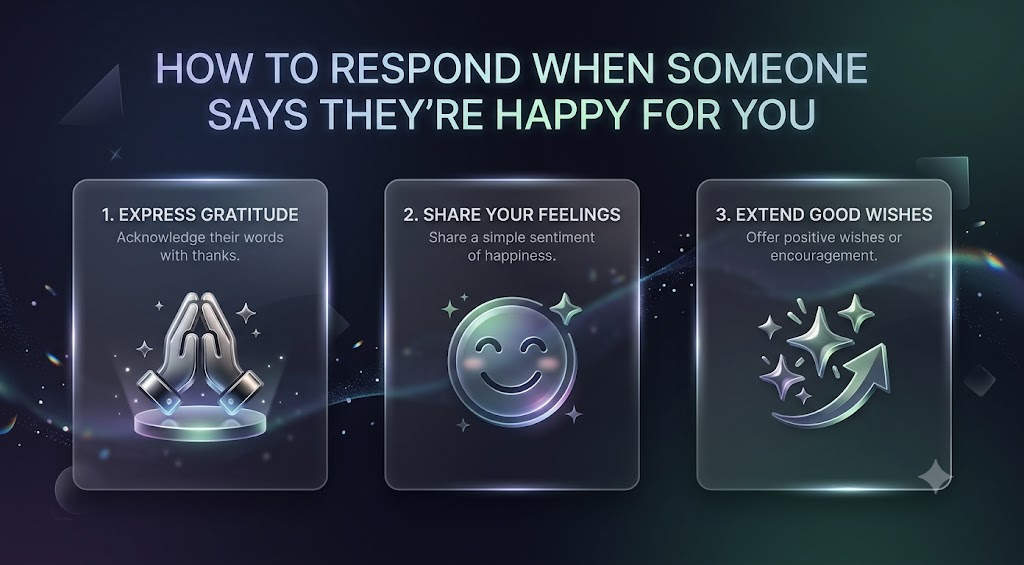
Sometimes the simplest replies are the most effective. You do not need an elaborate speech to express appreciation. A heartfelt response feels authentic and keeps the conversation comfortable for both people.
Examples include “Thank you so much,” “I really appreciate that,” “That means a lot to me,” or “I’m grateful for your support.” These replies fit almost every situation and communicate genuine appreciation without sounding overly formal or rehearsed.
Responding to Close Friends
Friends often celebrate your accomplishments with excitement because they have witnessed your journey firsthand. Their happiness usually comes from shared memories, encouragement, and genuine affection for your success.
You might reply with “Thank you, you’ve supported me through everything,” or “I’m lucky to have a friend like you.” Personalizing your response reminds them that their encouragement mattered and strengthens the friendship even further.
Replying to Family Members
Family members often feel proud of your achievements because they have invested time, love, and support throughout your life. Their happiness reflects both affection and pride in seeing you accomplish your goals.
Respond warmly by saying, “Thank you, your support helped me get here,” or “That means so much coming from you.” Acknowledging their role creates an emotional connection and lets them share in your special moment.
Professional Responses at Work
In professional settings, keeping your response polite and appreciative is usually the best approach. Colleagues may congratulate you on a promotion, successful project, or career milestone out of respect and teamwork.
Replies like “Thank you, I appreciate your encouragement,” or “That’s very kind of you to say” maintain professionalism while expressing gratitude. These responses help build positive workplace relationships and encourage future collaboration.
Responding to Acquaintances
Sometimes acquaintances or people you do not know well express happiness for your achievements. Although the relationship may not be close, their words still deserve appreciation and respect.
A simple response such as “Thank you, that’s very thoughtful of you,” or “I appreciate your kind words” is appropriate. It acknowledges their kindness without making the interaction feel overly personal or uncomfortable.
Funny Responses for Casual Conversations
Humor can make conversations more enjoyable when the situation feels relaxed. If you share a playful relationship with someone, a lighthearted response can add laughter while still expressing gratitude.
You might say, “Thanks, I’m still trying to believe it myself,” or “Finally, all that hard work paid off.” Funny replies should always remain friendly and respectful, ensuring they do not minimize the person’s genuine support.
Humble Yet Confident Replies
Balancing humility with confidence is important when receiving congratulations. Accepting praise graciously does not mean becoming arrogant, nor should you dismiss your achievements by downplaying them completely.
Try saying, “Thank you, I worked really hard for this,” or “I’m grateful everything came together.” These responses recognize your effort while remaining appreciative of the person’s encouraging words.
What to Avoid Saying
Certain responses may unintentionally make the other person feel uncomfortable. Saying “It wasn’t a big deal” or dismissing your success entirely can reduce the value of their sincere congratulations.
Similarly, avoid boasting excessively or comparing yourself to others. The goal is to appreciate their kindness rather than turning the conversation into self-promotion. Respectful humility always creates a better impression than unnecessary exaggeration.
Showing Gratitude Beyond Words
Your tone of voice, smile, and body language matter just as much as your response. Making eye contact, smiling naturally, and speaking sincerely help communicate genuine appreciation.
Small gestures like thanking someone later, returning their encouragement, or celebrating their achievements in the future also strengthen relationships. Kindness often becomes reciprocal when both people feel valued and respected.
Responding Through Text Messages
Text conversations require clear and warm wording because facial expressions and tone are missing. Keeping your response genuine helps prevent misunderstandings and ensures your appreciation comes across naturally.
Replies like “Thank you so much! That really means a lot,” or “I truly appreciate your support and kind words” work perfectly. Adding an emoji can also make the message feel friendlier when appropriate.
Social Media Replies
Many people congratulate others publicly on social media after seeing exciting news. Responding politely shows appreciation while maintaining a positive online presence and encouraging supportive interactions.
You could reply with “Thank you so much for your support,” “I appreciate your encouragement,” or “Your kind words truly mean a lot.” A brief but sincere response is often the most effective in public conversations.
Responding During Emotional Moments
Some achievements bring overwhelming emotions, making it difficult to find the right words. Whether you earned a degree, recovered from hardship, or achieved a lifelong dream, genuine feelings are perfectly acceptable.
Simply saying, “Thank you, that means more than you know,” can communicate deep appreciation. Honest emotion often makes your response more meaningful than carefully planned words ever could.
Building Better Relationships Through Gratitude
Every thoughtful response contributes to healthier personal and professional relationships. People remember those who acknowledge kindness with sincerity, appreciation, and respect. Expressing gratitude encourages stronger bonds and more positive communication in everyday life.
Learning How To Respond When Someone Says Theyre Happy For You is ultimately about valuing the people who celebrate your success. A sincere thank you, a warm smile, and genuine appreciation create meaningful connections that last long after the conversation ends.
About the Author